
Identity
Pseudocereal, groat, whole or light profile, origin and lot.
Pseudocereal flour for noodles, crepes, pancakes, bakery blends and formulations distinct from wheat.
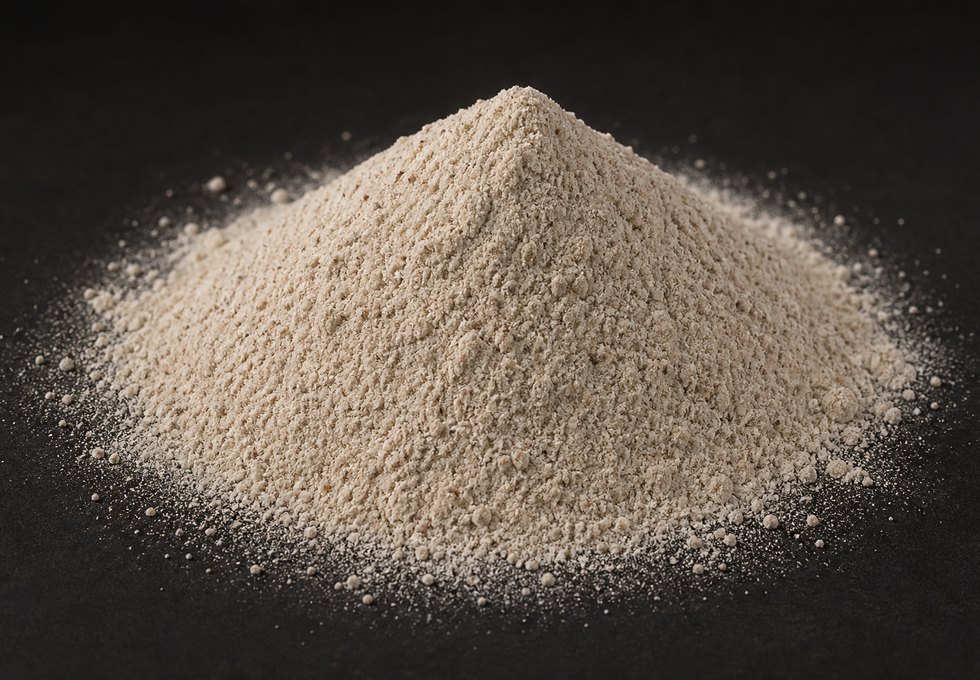
Although the name can mislead, buckwheat is a pseudocereal; its flour does not come from a wheat species.
Commercial function depends on dehulling, groat preparation, colour, earthy flavour, hull speck content and particle size.
It can be used in noodles, crepes, pancakes, bakery blends and wheat-free formulations, but any gluten-free claim depends on process control and cross-contact management.
Impurities, stones and other seeds are removed.
Hull is separated to obtain food groats.
The route defines whether flour is more whole or lighter.
Groat is ground and dark speck content is controlled.
Lot, particle size, colour and segregation are stabilised.
More whole-style flours can show darker colour and hull notes; lighter products aim for a more uniform profile.
Particle size changes hydration and texture in noodles, pancakes, crepes and bakery blends.
Not being botanical wheat does not by itself equal gluten-free certification; transport, mill and packing must manage cross-contact.
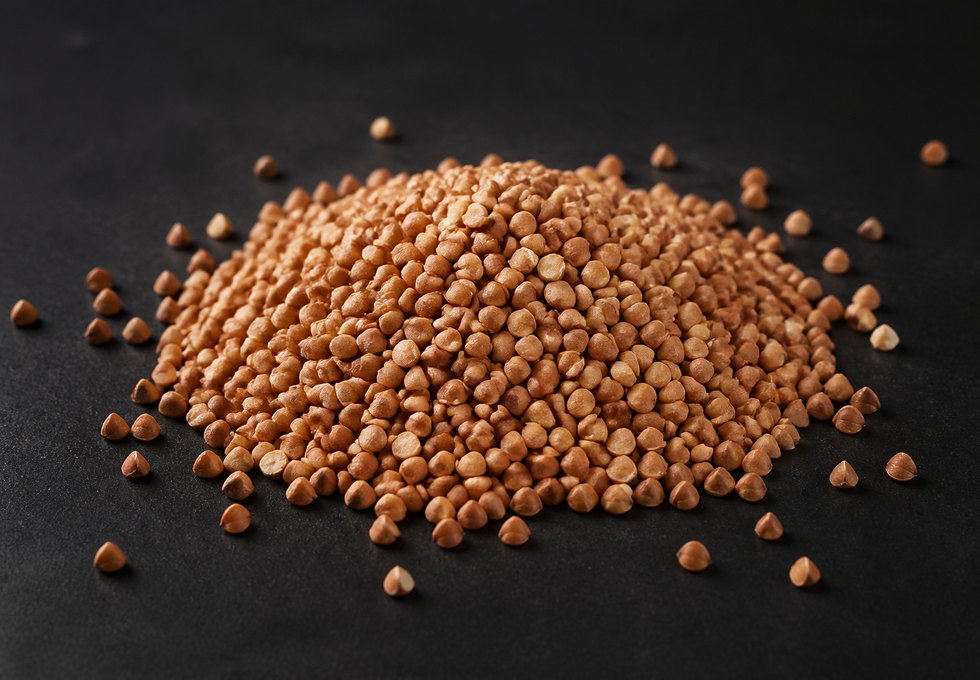
The sheet should state pseudocereal identity, dehulling process, groat type and colour profile; otherwise the name can mislead.
Buyers should review moisture, particle size, colour, flavour, microbiology, foreign material and gluten status through documentation.
KaizenGTC can help align international product terminology with lot documents and food use without certifying nutritional properties.
| Element | Verification |
|---|---|
| Botanical identity | State that it is a pseudocereal, not wheat. |
| Dehulling | Confirm groat, hull content and light or whole profile. |
| Particle size | Set it for noodles, crepes, pancakes or bakery blend. |
| Colour / flavour | Document expected profile and commercial tolerances. |
| Gluten | Declare only with segregation and cross-contact controls. |
Commercial reading combines raw-material availability, food tradition and formulation requirements; it should not be confused with wheat trade.
| Commercial reading | Prudent use | Source / period |
|---|---|---|
| Base buckwheat | Raw material | FAOSTAT provides crop context by year and country where the category is available. |
| Noodles and crepes | Application | Demand depends on flavour, colour, particle size and process documentation. |
| Wheat-free statements | Document control | Gluten-free references address controls, not automatic equivalence from botanical name. |
Sources: eCFR 21 CFR 101.91 gluten-free labelling · Codex General Principles of Food Hygiene · FAOSTAT
Pseudocereal, groat, whole or light profile, origin and lot.
Moisture, particle size, colour, foreign material, microbiology and flavour.
Gluten-free or wheat-free only with segregation, cleaning and testing scope where relevant.
No. It is a pseudocereal and is not botanical wheat.
It is typically cleaned, dehulled, prepared as groats, milled, classified and packed.
Colour depends on dehulling degree, hull fraction, extraction and process.
Only with sourcing, milling, packing and documentation controls that support the claim.
Noodles, crepes, pancakes, blended bakery and formulations where flavour and colour are desired.