
Granulation sheet
Sieves, particle distribution, colour, whole or degermed identity and intended use.
Milled maize product whose commercial identity depends on granulation, colour, process and application.
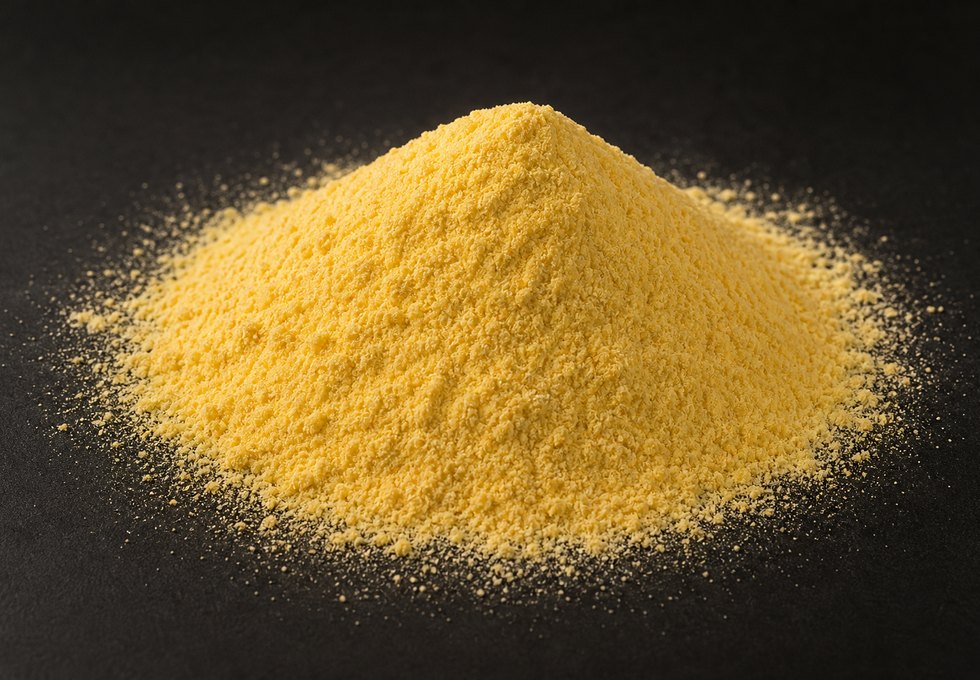
Corn flour requires clarity on whether the offer is fine milled maize, meal or grits with another granulation, whole-grain product, degermed product or separated starch.
The term corn flour shifts by market. In some destinations it means fine maize flour; in others it can be confused with cornstarch, a different fraction.
Professional buying should state variety or colour, process, particle size, residual fat, moisture, ash and controls inherited from the raw maize.
Foreign material, moisture and maize condition are checked before grinding.
Where used, the kernel is prepared to separate pericarp, germ and endosperm.
The route defines residual fat, colour, fibre and stability.
The product is adjusted to flour, meal or grits by particle size.
The lot is protected from moisture, pests, odours and cross-contact.
Particle size drives hydration, texture, extrusion, tortilla systems, wheat-free baking and batter performance.
Yellow or white colour, ash and fat help read raw material and process; whole-grain product will not have the same stability as a degermed one.
Mycotoxins do not disappear because the product is named flour. Evaluation should look at raw-maize controls, destination and applicable contractual limits.
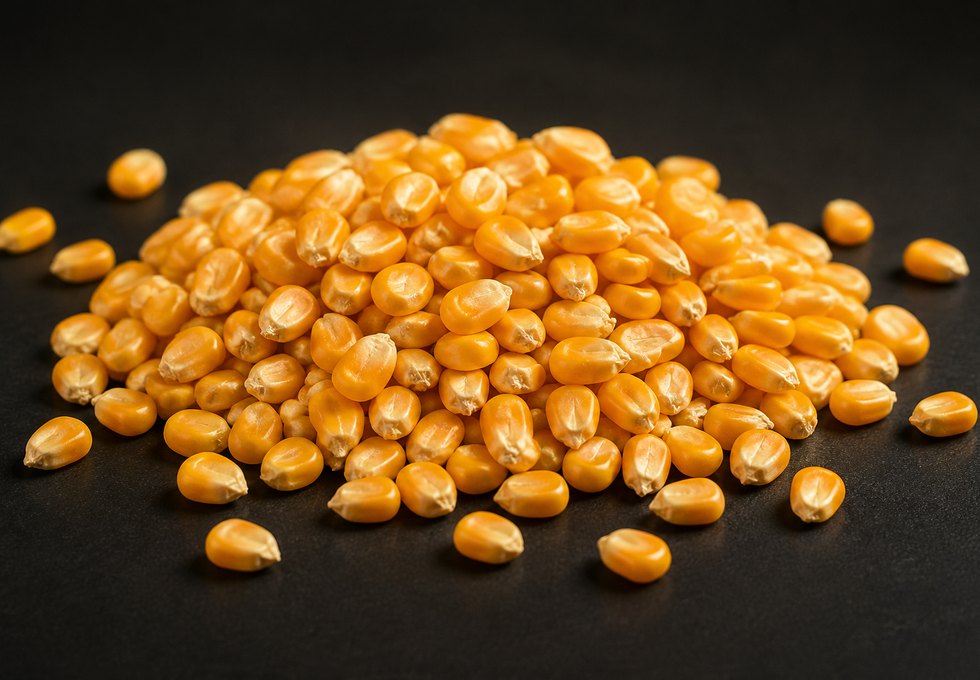
Cornstarch is a purified fraction; it should not be presented as corn flour to buyers seeking milled-grain flavour, colour or texture.
Whole maize flour retains germ and can have higher fat and oxidation sensitivity; degermed product improves stability and uniformity for industrial uses.
KaizenGTC should help align trade name, technical sheet, packing, certificate and destination rather than assuming one local term works everywhere.
| Element | Verification |
|---|---|
| Named product | Separate fine flour, meal, grits, whole-grain, degermed product and starch. |
| Particle size | Define sieve or distribution according to final use. |
| Colour | Confirm yellow, white or other agreed maize identity. |
| Fat and ash | Use them to read process, germ residue and stability. |
| Mycotoxins | Align raw-maize controls with contract and destination. |
Maize is a global raw material, but grain statistics do not automatically equal trade in food corn flour, meal or grits.
| Commercial reading | Prudent use | Source / period |
|---|---|---|
| Base maize | Raw material | USDA ERS gives sector context for maize and uses; it does not convert grain data into processed flour data. |
| Maize meal and grits | Technical identity | Codex CXS 154-1985 and CXS 155-1985 cover specific milled maize products. |
| Food manufacturing | Application | Buying depends on particle size, colour, food safety and packing form, not a generic ranking. |
Sources: Codex CXS 154-1985 Whole Maize Meal · Codex CXS 155-1985 Degermed Maize Meal and Grits · USDA ERS corn sector
Sieves, particle distribution, colour, whole or degermed identity and intended use.
Moisture, ash, fat, microbiology and mycotoxins where relevant.
Maize origin, milling lot, packing, production date and shelf life.
No. Flour and meal are milled maize products with different granulations; starch is a separated fraction with different functionality.
It changes hydration, texture, extrusion, coating, tortilla performance, baking and mouthfeel.
The process separates part of the germ, which can change fat, stability, colour and yield.
Yes, when the risk comes from the raw maize; controls should be set by origin, contract and destination.
Maize does not contain wheat gluten, but any claim requires process control and cross-contact management.