
Identity
Whole, dehulled, pearled, hulless or malted where relevant.
Cereal flour for blends, bakery and foods where fibre, flavour and absorption need documentation.
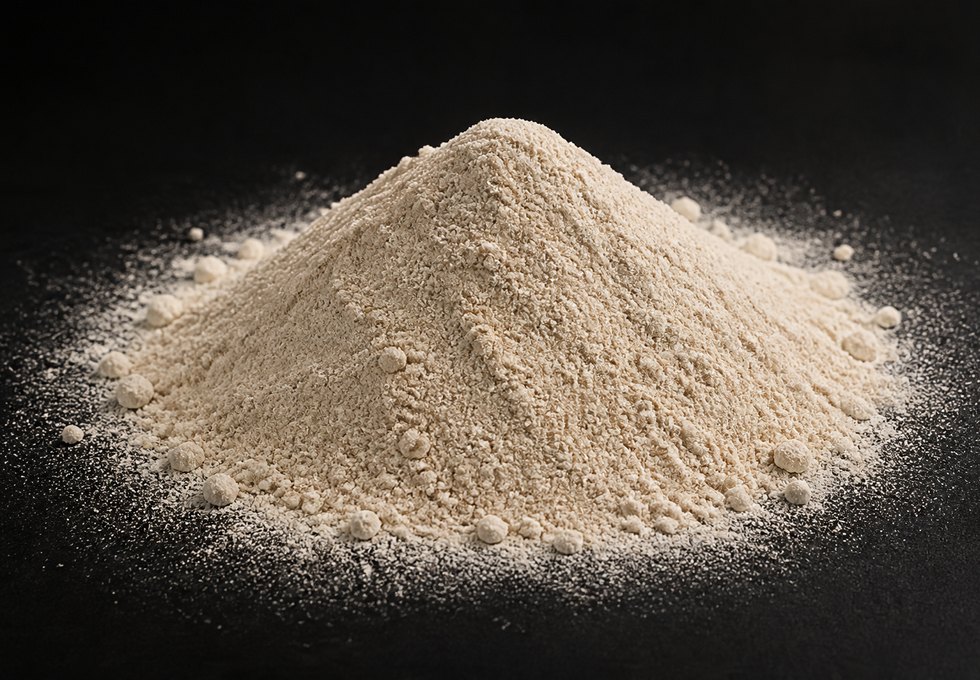
Barley flour may come from whole, dehulled, pearled or hulless barley depending on process; it should not be confused with malt flour.
Malt involves controlled germination and different enzymatic activity. If the product is malted barley flour, it should be named as such rather than treated as standard barley flour.
In bakery blends, soups or industrial foods, barley flour contributes flavour, fibre, beta-glucan when measured and absorption that differs from wheat.
Impurities, damaged kernels and foreign material are removed.
Depending on product, hull and outer layers are reduced before milling.
Prepared grain is ground to the agreed particle size and extraction.
Fractions are separated by granulation, colour and bran content.
The lot is protected from moisture, pests, odours and mixing with other allergens.
Barley does not develop a bread structure equivalent to wheat gluten; it is often used in blends where flavour, fibre and absorption are part of the design.
Beta-glucan can be a technical attribute when declared with analytical support, but content varies by raw material and process.
As a gluten-related cereal, barley should not be positioned as a gluten-free ingredient.
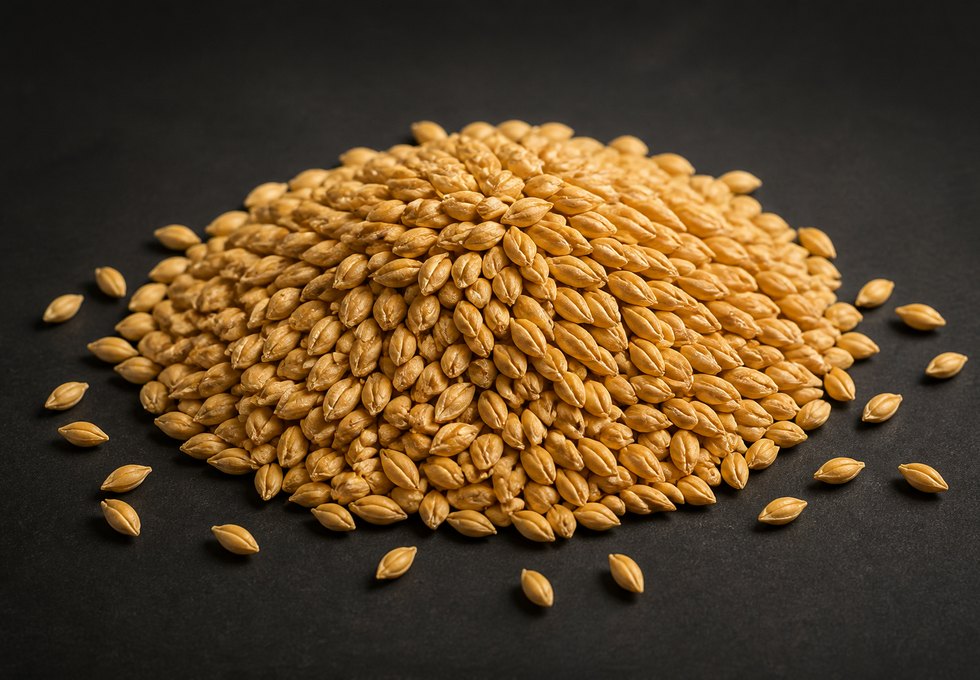
Malt flour may have intentional enzymatic activity; conventional barley flour is bought for milling and composition, not malting unless declared.
Buying parameters include moisture, particle size, colour, fibre, flavour, microbiology, mycotoxins where relevant and whole, dehulled or pearled status.
KaizenGTC can review that the contract does not mix malt, pearled barley and common flour under one ambiguous name.
| Element | Verification |
|---|---|
| Barley form | State whole, dehulled, pearled or hulless where applicable. |
| Malting | Declare separately if germination or intended enzymatic activity occurred. |
| Fibre / beta-glucan | Use analytical data when sold as an attribute. |
| Absorption | Validate it in the destination formula, not by analogy with wheat. |
| Gluten | Declare that barley is not suitable for gluten-free positioning. |
Barley has strong malt and feed markets, but food barley flour should be read as a processed ingredient with its own requirements.
| Commercial reading | Prudent use | Source / period |
|---|---|---|
| Base barley | Raw material | FAOSTAT provides crop context by year and country, not flour specification. |
| Bakery and blends | Application | Value depends on formulation, flavour, fibre and measured absorption. |
| Malt | Separate product | The malt chain should not substitute for a barley flour specification. |
Sources: 21 CFR 101.91 — gluten-free labelling · Codex General Principles of Food Hygiene · FAOSTAT
Whole, dehulled, pearled, hulless or malted where relevant.
Moisture, particle size, ash, fibre, beta-glucan if claimed, microbiology and lot.
Barley/gluten declaration, cross-contact and intended use.
No. Malt involves controlled germination and enzymatic activity; it should be declared as a different product.
Usually in blends, where it contributes flavour, fibre and absorption but does not replace wheat gluten structure.
Yes, it contains gluten-related prolamins and should not be treated as gluten-free.
It can be a fibre and viscosity attribute when measured; it should not be used as an unsupported medical promise.
It should state whether the flour comes from whole, dehulled, pearled, hulless or malted barley.