
Quality
COA with purity, moisture, ash and any additional contracted impurity limits.
Elemental sulphur reviewed through source, physical form, purity, industrial use and bulk handling.
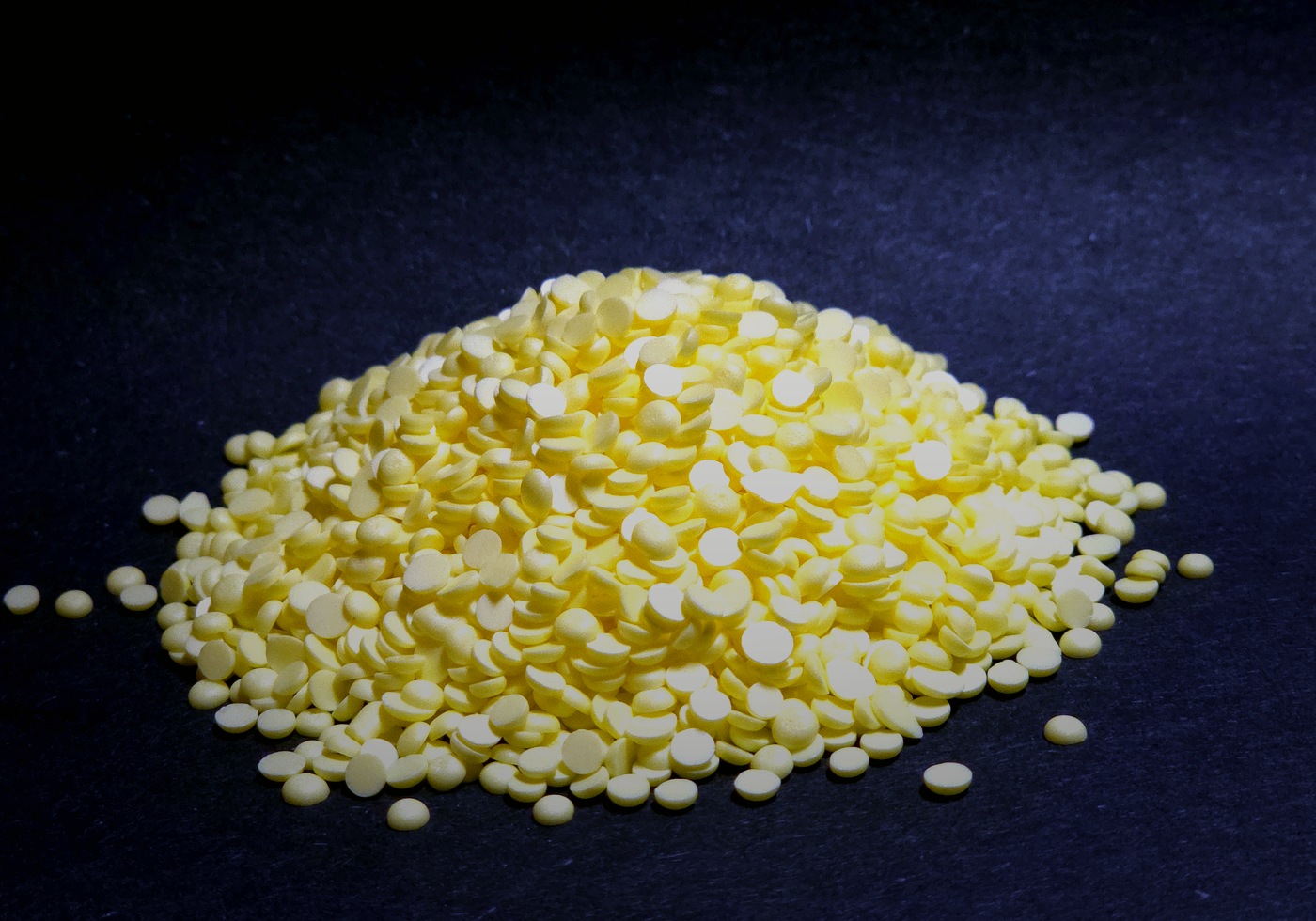
Commercial sulphur is commonly recovered from petroleum refining and natural-gas processing and is widely converted into sulfuric acid for fertilizer and industrial applications.
International files should distinguish elemental sulphur from sulfuric acid and define the actual physical form being offered, such as granules, prills or lumps.
Purity, moisture, ash, acidity and particle condition can affect downstream processing, storage, dust generation and acceptance at destination.
Sulfur-bearing streams from refining or gas processing are converted into elemental sulphur.
Molten sulphur can be solidified into granules, prills or other commercial forms.
Particle condition and fines are controlled for storage and shipment.
Purity, moisture, ash and other contracted parameters are verified.
Product is loaded in bulk or packaged form under segregation and safety controls.
A headline purity figure should be supported by a defined test method and by limits for moisture, ash and other impurities relevant to the destination plant.
Granular or prilled material generally offers more controlled handling than irregular lumps, but every terminal still needs procedures for dust, contamination, fire prevention and runoff.
The buyer should confirm whether the required use is sulfuric-acid production, fertilizer manufacture or another industrial process because acceptance criteria can differ.

Elemental sulphur is handled as an industrial solid and requires appropriate SDS-based procedures. Stockpiles, conveyors, holds and warehouses should be kept clean and managed to reduce contamination and dust.
Cargo condition, moisture exposure and fines should be checked before loading and at discharge because they influence handling and downstream process efficiency.
KaizenGTC facilitates commercial and documentary coordination; it does not present itself as a refinery, gas-processing plant or sulphur producer.
| Element | Verification |
|---|---|
| Purity | Confirm elemental sulphur content and test basis. |
| Moisture | Review contractual maximum and exposure during storage/loading. |
| Ash / impurities | Assess downstream compatibility and processing impact. |
| Physical form | Define granules, prills, lumps and tolerance for fines. |
| Safety file | SDS, fire precautions and terminal handling procedures should be available. |
Global sulphur supply is strongly linked to hydrocarbon processing, while a major share of demand flows through sulfuric-acid production and fertilizer value chains. Commercial review should connect source, form, quality, loading point and destination processing requirements.
| Market | Role | Context |
|---|---|---|
| Refineries / gas plants | SUPPLY | Recovered elemental sulphur depends on hydrocarbon processing and sulfur recovery. |
| Acid / fertilizer plants | INDUSTRIAL DEMAND | Sulphur is converted into sulfuric acid for fertilizer and other chemical uses. |
| Bulk terminals | LOGISTICS | Storage, dust, contamination and loading controls influence cargo acceptance. |
Sources: U.S. Geological Survey — Sulfur statistics and information; U.S. EPA AP-42 — Sulfur recovery; The Sulphur Institute glossary
COA with purity, moisture, ash and any additional contracted impurity limits.
Producer/recovery plant, lot or stockpile reference and country of origin.
SDS, form/sizing statement, loading method and terminal handling conditions.
A major end use is conversion into sulfuric acid, which is central to fertilizer production and many industrial chemical processes.
They are both formed elemental sulphur, but particle shape, size distribution and mechanical behaviour can differ by production process.
They help assess product cleanliness, handling behaviour and suitability for the receiving process.
Required form, purity, moisture, ash or other impurity limits, quantity, packaging or bulk mode, destination and Incoterm.