
Specification
Canola/rapeseed identity, origin, crop year, oil, moisture, dockage, damage and green seed.
Oilseed documented by commercial identity, crush quality and lot control.
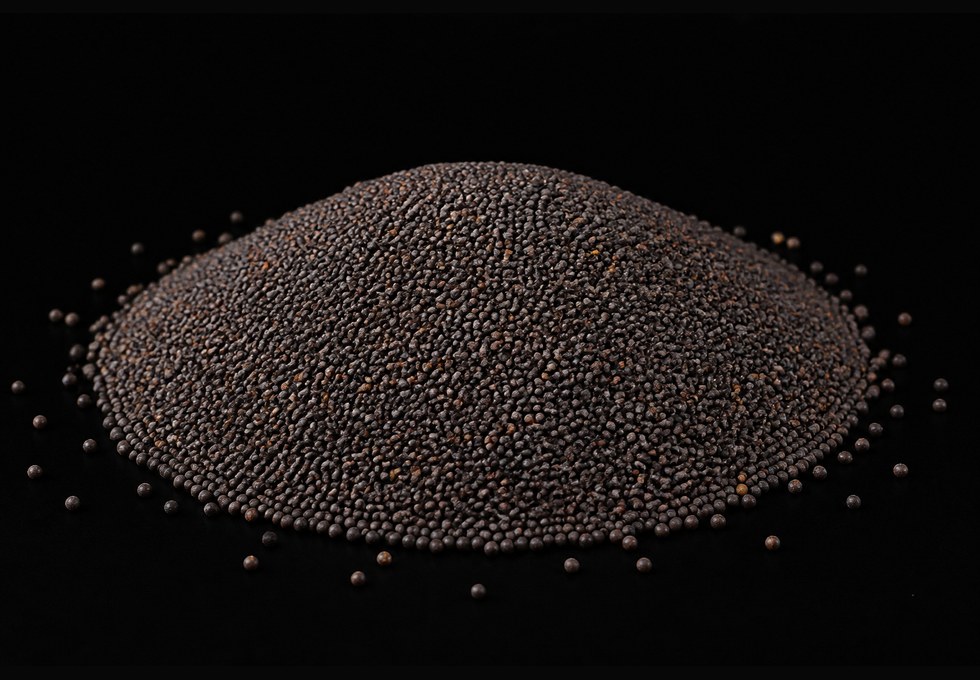
Canola describes a commercial quality linked to edible uses and accepted technical limits; rapeseed is a broader term that needs context.
A physical offer should state whether the lot is canola-quality seed, rapeseed or another contractual description accepted by the origin and buyer.
The seed is bought for potential oil and meal yield, but acceptance also depends on moisture, dockage, damage, varietal admixture and storage condition.
Origin, crop year, commercial variety and lot condition are identified.
Dockage, dust and foreign material are separated before crushing.
Seed is heated and adjusted for flaking and cooking.
Processing produces crude canola oil and protein meal.
Documents preserve canola identity, grade and destination.
Oil content guides crush value; moisture and dockage affect storage, cleaning and commercial deductions.
Green seed or elevated chlorophyll can affect oil colour and refining, so it should be treated as a grade or contract point when relevant.
Canola requirements are not identical across origins. Canadian Grain Commission references and the contract help organise terminology, grade and applicable tolerances.

Canola seed requires moisture, temperature, cleanliness and pest control because small seeds are sensitive to deterioration and mixing with foreign material.
Lots should remain segregated when canola identity, origin, grade or quality condition cannot be rebuilt at the end of the chain.
KaizenGTC facilitates documentary comparison between offer, certificate and contract; it does not replace inspection or buyer-required laboratory work.
| Element | Verification |
|---|---|
| Oil content | Check analytical basis and relationship to expected crush yield. |
| Moisture | Confirm contractual limit and storage safety. |
| Dockage | Measure removable material, impurities and cleaning requirement. |
| Green seed | Assess potential impact on colour, chlorophyll and refining. |
| Commercial identity | Clarify canola, rapeseed and grade according to origin, standard and contract. |
USDA FAS reports rapeseed/canola within the oilseed complex; commercial reading for 2026/27 should separate seed production, crushing and trade in oil or meal.
| Market | Role | Context / period |
|---|---|---|
| Canada | PRODUCTION / EXPORT | 2026/27 reference for canola supply and seed exports. |
| European Union | CRUSH / CONSUMPTION | 2026/27 market relevant to processing and food/biodiesel demand. |
| China, Japan and Mexico | IMPORT / PROCESSING | 2026/27 destinations where imports and crushing require specific documentation. |
Sources: USDA FAS Oilseeds: World Markets and Trade, September 2026; USDA FAS PSD Online; Codex Standard for Named Vegetable Oils
Canola/rapeseed identity, origin, crop year, oil, moisture, dockage, damage and green seed.
COA or inspection, phytosanitary certificate, origin, fumigation if applicable, weight and shipping documents.
State whether the destination is food crush, meal/feed, biodiesel or another contractual channel.
Not always. Canola is used for a specific commercial quality; rapeseed can be broader and should be clarified by contract and origin.
It guides the economic yield of crushing and can affect the relative value of the lot.
Dockage is foreign or removable material that accompanies the seed and can affect cleaning, accepted weight and deductions.
It can be linked to chlorophyll and may affect oil colour or refining, depending on level and destination.
Contract, grade or inspection, COA, origin and the standard or commercial reference accepted by buyer and seller.