
Specification
Corn germ oil, crude/refined/RBD form, FFA, peroxide value, colour, odour, moisture and impurities.
Vegetable oil associated with corn germ, documented by process, refining status and chemical quality.
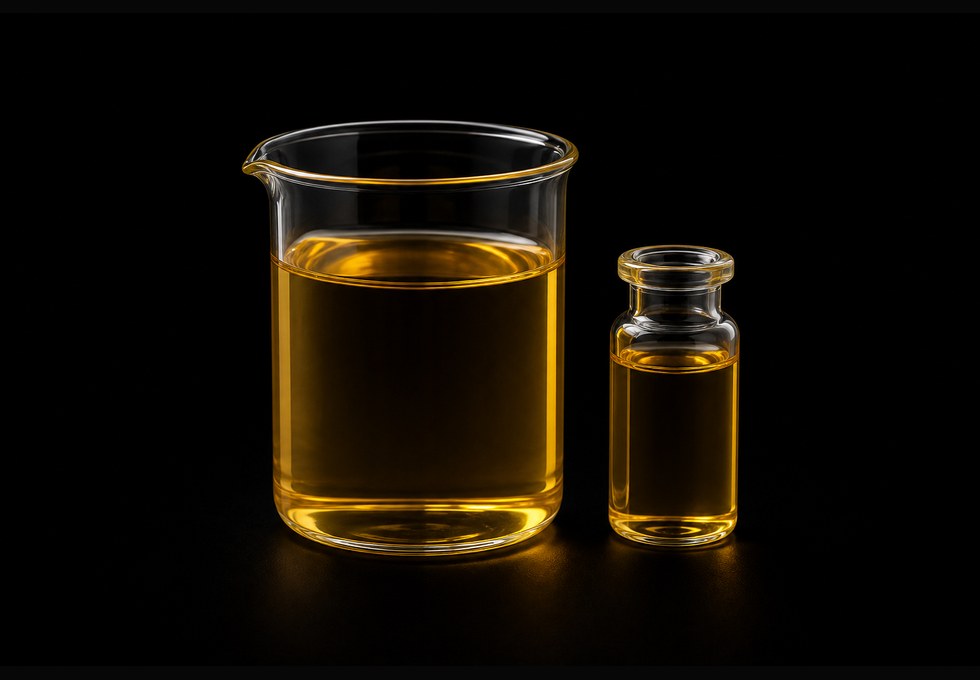
Corn oil is primarily associated with corn germ recovered through wet or dry milling routes before extraction.
It should not be described as simple whole-grain pressing: germ separation and germ condition influence yield and oil quality.
The contract should state whether the oil is crude, refined, RBD or another form, and which limits apply for food or industrial use.
Corn is processed to separate fractions, including germ.
Germ is concentrated and conditioned for extraction.
Crude corn germ oil is obtained.
Degumming, neutralisation, bleaching and deodorising are applied according to destination.
Clean, dry tanks preserve colour, odour and stability.
Germ condition affects acidity and quality; FFA, peroxide value, colour, moisture and impurities should be checked in the final oil.
Refined corn oil is often valued for colour, neutral flavour and food suitability, but those attributes should be documented in the COA.
Codex recognises maize oil as derived from Zea mays germ; that identity alone does not define a complete contractual specification.
Corn oil needs protection against water, oxygen, odours and unsuitable temperatures. Tank or flexitank cleanliness is an acceptance point.
The industrial origin may connect with starch, ethanol or food milling, so documents should clarify route, oil form and destination.
KaizenGTC facilitates commercial and documentary reading; technical assurance depends on lot certificates and laboratories.
| Element | Verification |
|---|---|
| Germ / origin | Confirm relation to corn germ and declared process. |
| FFA | Measure acidity and raw-material/process condition. |
| Peroxide value | Control oxidation and stability. |
| Colour / odour | Validate refining and food suitability. |
| Moisture / impurities | Avoid water, sediment and deterioration. |
Corn oil is not read only from maize grain production; it also depends on milling, germ recovery and food-oil demand.
| Market | Role | Context / period |
|---|---|---|
| United States, China and Brazil | MILLING / PRODUCTION | 2026/27 context for maize and industrial chains with germ recovery. |
| Latin America and Asia | CONSUMPTION / IMPORT | Markets where refined oil and food use require a specific COA. |
| European Union | REGULATION / FOOD | Destination with documentary focus on safety, traceability and food compliance. |
Sources: USDA FAS PSD Online; Codex Standard for Named Vegetable Oils; USDA ERS corn sector context
Corn germ oil, crude/refined/RBD form, FFA, peroxide value, colour, odour, moisture and impurities.
Origin, milling route where applicable, refining status and technical profile of the lot.
Clean tank or flexitank, previous-cargo history, seals, temperature and shipping documents.
Corn oil is primarily derived from germ separated during milling before extraction.
Not as the main commercial description. The usual route involves germ recovery and extraction.
Crude oil retains removable components; refined oil adjusts acidity, colour, odour and impurities according to process.
FFA, peroxide value, moisture, impurities, colour, odour and declared commercial form.
Water, oxidation, residual odours, cross-contamination and unsuitable heat exposure.