
Product
Ingredients, concentration or solids when relevant, lot, net weight and packing.
Frozen food product validated by process, formulation, microbiology, packing and uninterrupted cold chain.
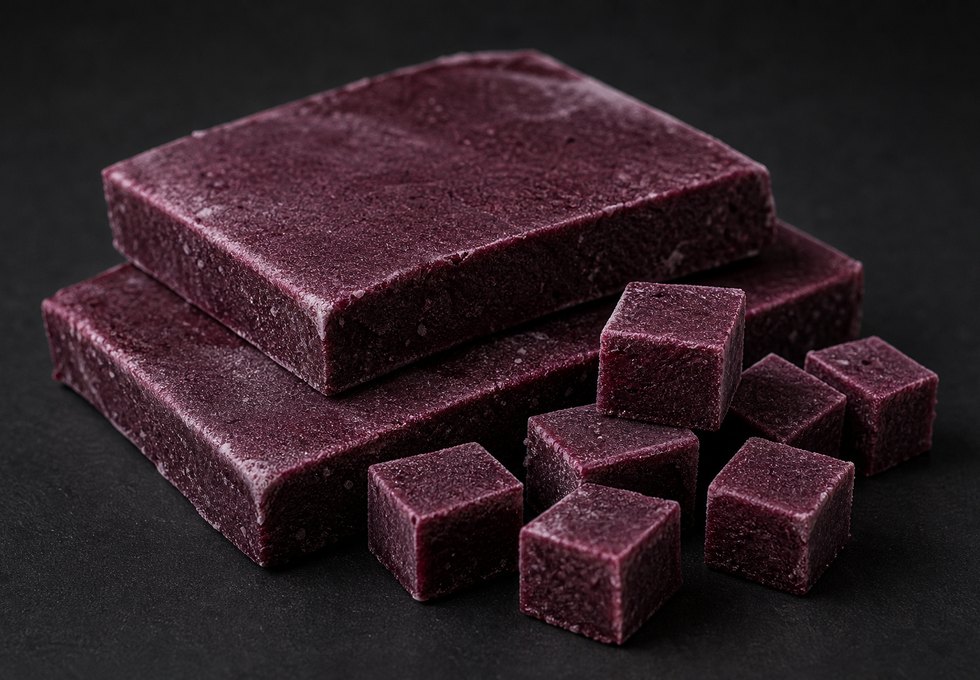
Frozen açaí pulp is a processed food that depends on fruit reception, hygiene, pulping, formulation, rapid freezing and frozen distribution.
The contract should state whether the product is pure or formulated pulp, solids or concentration when specified, added ingredients, net weight, packing and lot.
It should not be confused with freeze-dried açaí powder. Frozen pulp requires temperature control and cold chain according to specification.
Origin, condition, ripeness and handling times are checked.
The process reduces surface load and foreign material before pulping.
Pulp is separated according to formulation, concentration and destination.
Net weight, lot, ingredients and sealing are documented before freezing.
Rapid freezing, frozen storage and transport preserve product condition.
Frozen pulp and freeze-dried açaí are commercially and logistically distinct forms. Frozen pulp requires documented formulation, packaging, microbiology and cold-chain integrity; freeze-dried açaí is a dry product with different moisture, packaging and handling specifications.
Technical review should cover formulation, solids when declared, microbiology, packing, seal integrity, net weight, lot and temperature record.
Functional or nutritional claims belong in the file only when supported by regulatory and scientific documentation for the destination.

Frozen pulp requires storage and transport at the agreed temperature, with protection from thawing, packaging damage and lot mixing.
The documentary set should include COA, microbiology, ingredients, formulation or concentration when relevant, lot, shelf life, storage temperature, packing list and origin.
KaizenGTC can review documents and supply route without operating cold stores or guaranteeing inventory.
| Element | Verification |
|---|---|
| Temperature | Define storage range and cold-chain evidence. |
| Formulation | Identify pure pulp, additions or declared concentration. |
| Microbiology | Tie analysis to lot and food destination. |
| Packing | Review net weight, seal, integrity and label. |
| Freeze-dried comparison | Separate dry powder from frozen pulp. |
Frozen açaí supply is better understood through formulation, packing, origin and cold chain than through aggregated agricultural statistics.
| Commercial reading | Prudent use | Source / period |
|---|---|---|
| Fruit preparations | Food use | Beverages, food service and formulation bases require finished-product specification. |
| Cold chain | Logistics risk | Temperature and transit times condition commercial acceptance. |
| Classification | Caution | Trade databases may aggregate fruit pulps and preparations in broad codes. |
Sources: Codex quick-frozen food references · Codex General Principles of Food Hygiene · UN Comtrade Plus
Ingredients, concentration or solids when relevant, lot, net weight and packing.
Microbiology, hygienic process, shelf life and temperature control.
Frozen condition, cold records, packing list, origin and route.
A processed fruit product that is packed and frozen, with formulation, lot, microbiology and temperature documented.
Thawing or temperature abuse can affect food safety, texture, shelf life and acceptance.
No. Frozen pulp is handled in the cold chain; freeze-dried product is a low-moisture dry product.
Yes, if the formulation states them. The contract should separate pure pulp, blend or formulated product.
COA, microbiology, ingredients, formulation, lot, shelf life, temperature, packing and origin documents.